
There's no single number that tells you what you'll pay. Your cost depends on your age, where you live, your household size, your income, the plan type you choose, and how much healthcare you expect to use. Anyone who quotes you a flat national average isn't giving you your actual price.
This article breaks down monthly premiums, deductibles, and other out-of-pocket costs. We'll cover available savings, tax considerations, and a practical way to build your own annual healthcare budget as a self-employed worker.
TL;DR
- National average: $741/month before subsidies, about $178/month after for those who qualify
- Age, location, household size, and income drive most of your premium
- Lower-premium plans often mean higher deductibles and more exposure if you get sick
- Compare total annual cost—premium, deductible, network, and prescriptions—not just the monthly bill
How Much Does Self-Paid Health Insurance Cost for Freelancers?
There's no fixed freelancer health insurance price. What you pay each month is separate from what you might pay over a full year if you actually use your plan.
For example, a 35-year-old self-employed parent in Houston might get one quote for $380 a month and another for $690 a month for a different plan design. Both numbers are "real," but they represent very different coverage.
Typical Cost Range
Nationally, the average ACA Marketplace premium was $741 per month before subsidies in 2026, dropping to $178 after subsidies across all enrollees. Among people who actually qualified for a subsidy, the average dropped further, to $96 a month.
Rates vary by state and even by county. A freelancer in Alaska paid an average of $1,043 before subsidies in 2026, while someone in Alabama paid closer to $743. Locally, pricing in Harris County can differ from pricing in Austin or San Antonio.

Rough profiles to consider:
- Younger, healthy freelancer: Often qualifies for lower premiums and may lean toward a high-deductible plan
- Mid-career freelancer with regular prescriptions: Usually pays more monthly but saves on drug costs and specialist visits
- Freelancer with a spouse or kids: Family coverage costs more because every added person adds risk and potential claims
Your premium keeps your coverage active. That's it. It doesn't erase your deductible, copays, coinsurance, prescription costs, or what you'd owe for going out-of-network.
Cost Components Freelancers Should Budget For
Budget for these pieces, not just the premium:
- Monthly premium — your fixed recurring cost
- Annual deductible — what you pay before insurance starts covering costs
- Copays and coinsurance — your share of costs after the deductible
- Prescription costs — often separate from your medical deductible
- Out-of-pocket maximum — the most you'll pay in-network in a plan year
The national average deductible for ACA plans rose to $3,786 per person in 2026. Individual out-of-pocket maximums are capped at $10,600 in 2026.
A $350/month plan with a $7,500 deductible and a $650/month plan with a $2,500 deductible aren't equal. The cheaper plan saves you $3,600 a year in premiums, but you're exposed to $5,000 more before real coverage kicks in. Run both scenarios: expected-year cost and a bad-year cost where you actually hit that deductible.
One detail freelancers miss: premiums generally don't count toward your out-of-pocket maximum. Neither do most prescription costs on many plans. Check the plan documents, not just the marketing summary.
Metal Tiers, Plan Types, and Alternatives
Those premium-versus-deductible tradeoffs show up clearly in metal tiers. Bronze, Silver, Gold, and Platinum describe how costs are split between you and the insurer, not the quality of the doctors:
| Tier | Plan Pays | You Pay |
|---|---|---|
| Bronze | 60% | 40% |
| Silver | 70% | 30% |
| Gold | 80% | 20% |
| Platinum | 90% | 10% |
Beyond metal tiers, freelancers also choose among several coverage paths:
- ACA Marketplace plans — subsidy-eligible with standardized consumer protections
- Private plans outside the Marketplace — often allow year-round enrollment
- Spousal or family coverage — if a partner has employer benefits
- COBRA — temporary continuation of prior employer coverage
- Short-term coverage — fewer protections and more limited benefits
Eligibility, subsidies, and benefit rules differ across these options, so don't assume one works like another.
Key Factors That Affect the Cost of Self-Paid Health Insurance
Insurers and the Marketplace use a specific, limited set of factors to set your premium. Your final net cost, though, depends on more than pricing rules.
Age, Location, Tobacco Use, and Household Size
By law, Marketplace plans can only base your premium on:
- Your age (older enrollees can be charged up to three times more than younger ones)
- Where you live (state and rating area)
- Tobacco use, in states that allow it
- Whether the plan covers dependents
ACA-compliant plans cannot price you differently based on health history or pre-existing conditions. Non-ACA products, like short-term plans, follow different rules and can exclude pre-existing conditions entirely.

Income, Subsidies, and Irregular Freelance Earnings
Freelance income swings. That makes subsidy planning trickier than it is for salaried employees.
Premium tax credits are generally tied to your projected annual household income relative to the federal poverty level. Use a realistic full-year estimate, not your best or worst month.
If your income changes materially during the year, update your Marketplace application. Otherwise, you'll owe money back at tax time when you reconcile advance credits using IRS Form 8962.
Plan Tier, Network, and Provider Flexibility
| Plan Type | Referrals Needed | Out-of-Network Coverage | Typical Premium |
|---|---|---|---|
| HMO | Yes | Rarely, except emergencies | Lower |
| PPO | No | Yes, at higher cost | Higher |
| EPO | No | Rarely, except emergencies | Moderate |
| POS | Yes | Limited | Moderate |
| HDHP | Varies | Varies | Lower premium, higher deductible |
Freelancers who work across state lines, or who split time between Houston and, say, Dallas, should pay close attention to network reach. A nationwide PPO often makes more sense here than a narrow local HMO, even at a higher premium.
Expected Healthcare Use and Prescription Needs
If you see a specialist regularly, manage a chronic condition, or take an ongoing prescription, a higher-premium plan with lower cost-sharing can end up cheaper over the year. Two plans that look identical on paper can diverge sharply once you check the drug formulary. A single medication on a less favorable tier can change the math overnight.
Before enrolling, check:
- Whether your medications are covered and at what tier
- Prior authorization requirements for ongoing treatment
- Specialist copay amounts
- Estimated costs for services you use regularly
Tax Treatment and Savings Tools
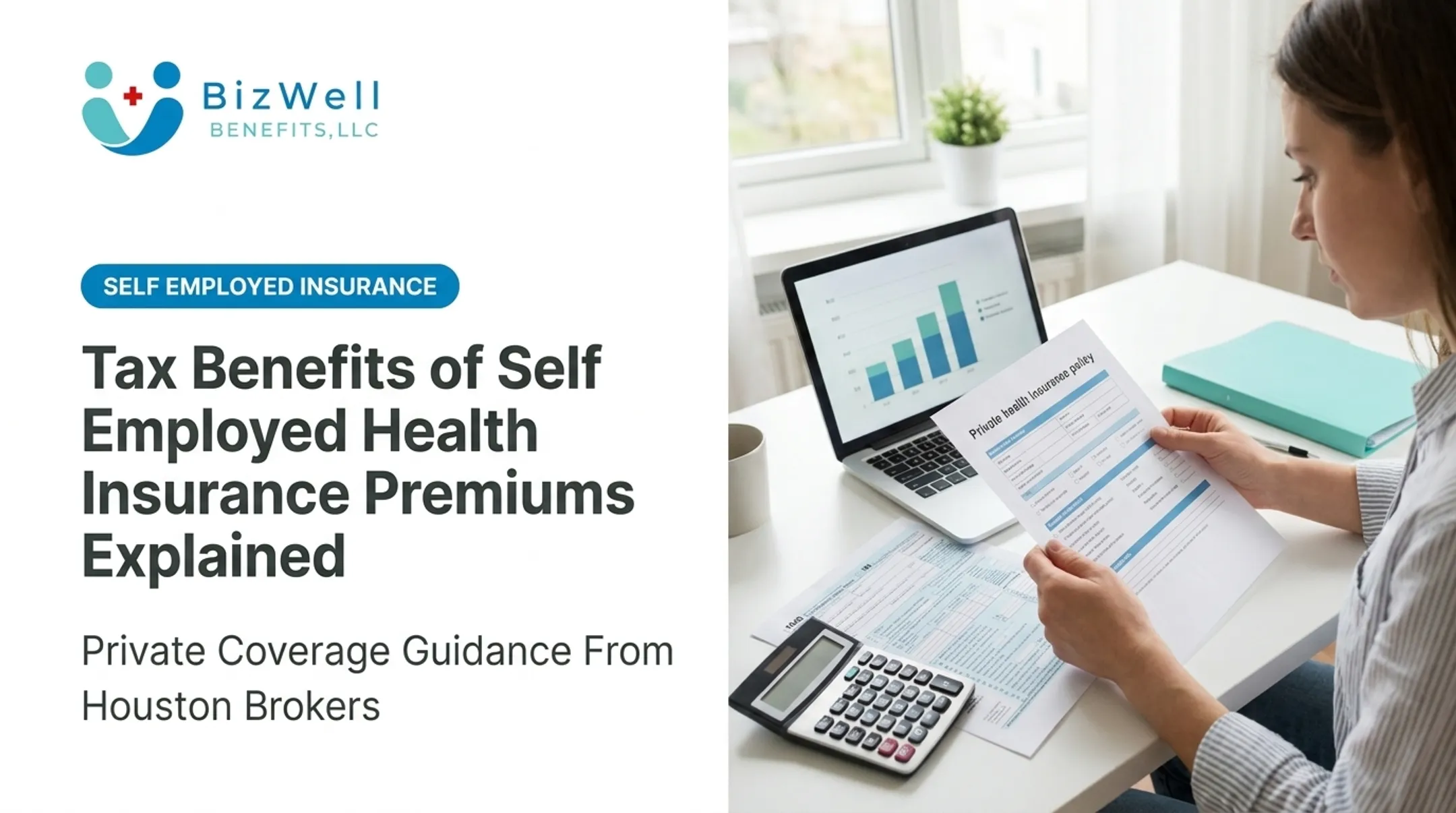
Self-employed workers who aren't eligible for a spouse's employer plan may deduct health insurance premiums for themselves, a spouse, and dependents using IRS Form 7206. Deduction limits depend on your business's net profit, so confirm your specific eligibility with a tax professional.
If you choose an HDHP, you may also qualify for a Health Savings Account. HSAs let you set aside pre-tax money for medical expenses, and unused funds roll over year to year. Confirm your specific plan is HSA-qualified before assuming this benefit applies.
How to Estimate and Reduce Your Health Insurance Budget
The right plan balances four things: premium affordability, access to your preferred doctors, predictable cost-sharing, and protection against a major medical bill. Getting all four requires a real budget, not a guess.
Build a Freelancer-Specific Annual Cost Estimate
- Start with 12 months of premiums after any confirmed subsidy
- Add expected routine costs: checkups, prescriptions, and labs. Use last year's EOBs plus about 5% for inflation
- Calculate maximum exposure: annual premium plus the plan's out-of-pocket maximum, since premiums usually don't count toward that cap
- Build a cash reserve for your deductible, especially important when freelance income fluctuates

Compare Lower-Cost and Higher-Cost Plans
A lower-premium Bronze or HDHP-style plan tends to suit freelancers who rarely see doctors and can comfortably cover a higher deductible if something comes up.
A Silver, Gold, Platinum, or broader PPO plan is worth the higher monthly cost if you have:
- Frequent doctor visits or ongoing treatment
- Expensive or multiple prescriptions
- Established specialists you don't want to lose
- A strong preference for predictable monthly costs over surprises
Run three numbers before deciding: your expected-year cost, a high-use-year cost, and your worst-case in-network exposure. That third number is the one people skip, and it's usually the most important.
Identify Legitimate Ways to Lower Total Costs
- Check current eligibility for Marketplace subsidies, Medicaid, and cost-sharing reductions — don't assume eligibility from gross revenue alone
- Stay in-network and use covered preventive care whenever possible
- Review your prescriptions annually against the plan formulary
- Compare plans during each enrollment period rather than auto-renewing
Be cautious with short-term coverage, health-sharing arrangements, or other limited-benefit products marketed on price alone. These often exclude pre-existing conditions, cap benefits, and skip ACA consumer protections entirely. Health-sharing ministries in particular are not technically insurance, and coverage isn't guaranteed.
Know When Professional Plan Comparison May Help
Before requesting quotes, gather:
- Household size and projected annual income
- Current doctors and prescriptions
- Travel patterns if you work across state lines
- Deductible tolerance and target monthly budget
An independent broker such as BizWell Benefits can compare options across multiple carriers and show how premiums, networks, deductibles, and out-of-pocket costs fit your situation. You can get free, no-pressure guidance as a self-employed professional comparing individual and family coverage.
Conclusion
A freelancer's self-paid health insurance cost isn't one number. It's a combination of:
- Plan design and household size
- Location, income, and assistance eligibility
- Expected healthcare use
Before you enroll:
- Compare total annual cost, not just the premium quote
- Verify current plan details—don't assume last year's plan still fits
- Recheck fit when income or health needs change
If you want a second set of eyes on your options, a licensed broker at BizWell Benefits can compare carriers with you at no cost.
Frequently Asked Questions
How much is health insurance if not through an employer?
Age, location, income, household size, and plan design all drive the price. National averages ran about $741/month before subsidies and $178/month after subsidies in 2026. Get a current personal quote instead of relying on averages.
Is $800 a month a lot for health insurance?
For one adult, $800 is above the national pre-subsidy average. It can still fit a family, an older enrollee, or a lower-deductible plan. Confirm whether that figure is before or after subsidies.
Can I get my own health insurance without an employer?
Yes. Freelancers can buy individual coverage through the ACA Marketplace or private channels outside it. Also check spousal plans, Medicaid eligibility, and special enrollment periods when they apply.
What insurance do I need if I am self-employed?
Most freelancers start with comprehensive individual or family major medical coverage. Add disability or HSA-compatible options as needed, and don’t treat limited-benefit products as a major-medical substitute.
What is the average cost of private health insurance in the UK?
This article covers U.S. health insurance only. UK private coverage runs alongside the NHS under different rules, so U.S. prices don’t apply. Use current UK sources for local pricing.