
Pricing swings based on your age, state, household size, tobacco use, plan tier, network type, deductible, and whether you qualify for subsidies. This guide breaks down researched 2024 price ranges, explains what your premium actually buys, why PPO plans often cost more, and how to build a realistic coverage budget instead of guessing.
Key Takeaways
- Unsubsidized individual premiums averaged $364–$488/month in 2024 by plan tier.
- Employer-sponsored plans averaged $746/month single and $2,131/month family in total premiums.
- Income-based subsidies can cut net premiums to near $0/month for eligible households.
- PPO plans usually cost more upfront while easing network limits and referral requirements.
- Budget for premium plus deductible exposure and copays—not the premium alone.
How Much Does Private Medical Insurance Cost in 2024? (Pricing Overview)
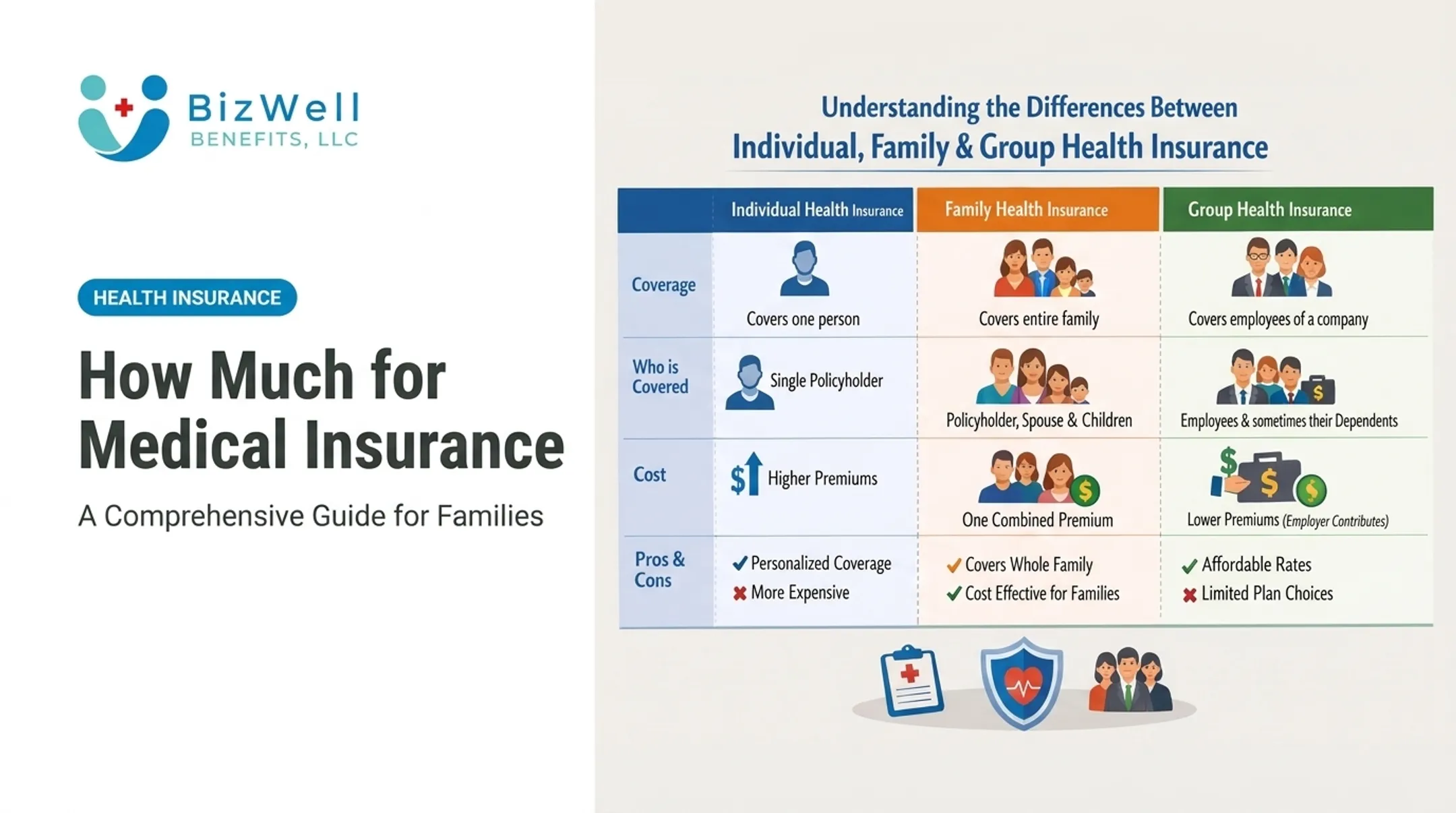
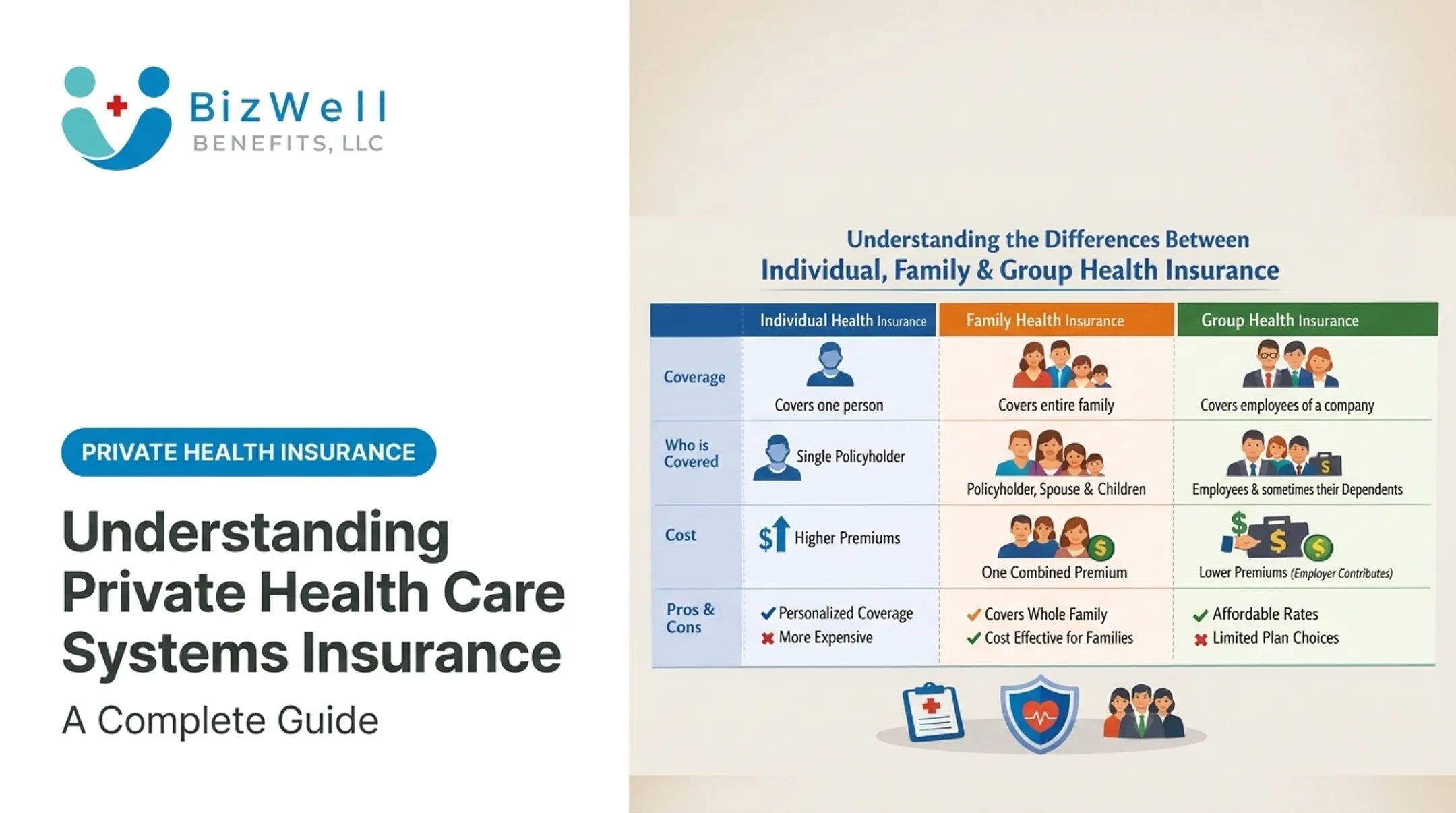
"Private medical insurance" covers a few different buckets: individual and family plans bought directly from a carrier, ACA Marketplace plans, and employer-sponsored group coverage. Pricing looks very different depending on which one you're comparing.
Typical Cost Ranges by Plan Tier
Marketplace data from KFF shows the following national averages for a 40-year-old in 2024, before any subsidy is applied:
| Plan Tier | Avg. Monthly Premium | Typical Deductible | Cost-Sharing Split |
|---|---|---|---|
| Bronze | $364 | ~$7,500 | Plan pays 60% / you pay 40% |
| Silver | $468–$477 | ~$5,900 | Plan pays 70% / you pay 30% |
| Gold | $488 | ~$1,500 | Plan pays 80% / you pay 20% |
Source: KFF's average Marketplace premiums by metal tier, 2024 data.
Employer-sponsored coverage runs on a different scale. KFF's 2024 survey found the total average annual premium (employer plus employee share) was $8,951 for single coverage and $25,572 for family coverage.
That equals roughly $746/month and $2,131/month before anyone splits the bill.
Real-world variance is common. One BizWell Benefits client, a 35-year-old self-employed parent in Houston, received quotes ranging from $380 to $690 per month for private coverage, depending on network breadth and deductible. Neither figure is a national average, but it illustrates how much plan design moves the price.
What Each Price Point Typically Buys
Lower-premium plans (Bronze-style, roughly $360–$400/month):
- Higher deductible, often $6,000+
- Narrower network or more referral requirements
- Best for healthy people who rarely see doctors and want protection mainly against a major medical event
Mid-range plans (Silver-style, roughly $450–$550/month):
- Moderate deductible, often $3,000–$6,000
- Balanced cost-sharing for people with occasional specialist visits or ongoing prescriptions
- The only tier eligible for cost-sharing reductions if income qualifies
Higher-cost plans (Gold, Platinum, or PPO-heavy, $500–$700+/month):
- Lower deductible, often under $2,000
- Broader networks, fewer referral hoops, and sometimes out-of-network benefits
- Best for people managing chronic conditions, frequent specialist care, or expensive prescriptions
Cost Breakdown: What Your Premium Does and Doesn't Cover
Your premium keeps coverage active. It doesn't pay your medical bills by itself. These line items drive total spending:
- Premium – the recurring monthly charge; an employer or subsidy may cover part of it, but the "sticker price" is the full gross amount
- Deductible – what you pay before the plan starts sharing costs. A $3,000 deductible means paying near-full price for most services until you hit that number
- Copays and coinsurance – a copay is a flat fee (say, $30 for a primary care visit); coinsurance is a percentage you owe after the deductible (say, 20% of a $2,000 procedure)
- Out-of-pocket maximum – the yearly cap on in-network covered care ($9,450 self-only / $18,900 family in 2024, per CMS). Premiums and non-covered services don't count
- Network and non-covered costs – out-of-network care, balance billing, and prescriptions outside the formulary can add spending that never touches your out-of-pocket max

Key Factors That Affect the Cost of Private Medical Insurance
Some factors move your quoted premium. Others affect what you actually pay over the year regardless of premium. Both matter.
Age and Household Composition
ACA rules cap age-based pricing at a 3:1 ratio. Insurers can charge older adults no more than three times what they charge a 21-year-old for the same plan.
Family premiums generally add each covered person's cost, though only the three oldest dependents under 21 count toward the total. A couple in their 50s will pay noticeably more than the same plan for two people in their 20s.
Location and Insurer Availability
State regulations, provider competition, and local healthcare prices all shift premiums. KFF's county-level data shows just how wide this gap gets:
| 2024 Avg. Monthly Premium | U.S. National | Texas | Vermont |
|---|---|---|---|
| Lowest-cost Bronze | $364 | $334 | $726 |
| Lowest-cost Silver | $468 | $468 | $948 |
| Lowest-cost Gold | $488 | $409 | $1,018 |
A Bronze plan in Vermont costs more than double the same tier in Texas. Nationally, the average enrollee had access to 6.9 issuers and roughly 100 plans in 2024, so availability itself varies by ZIP code.
Plan Tier and Cost-Sharing
Higher actuarial value (Gold, Platinum) means the plan covers a bigger share of costs, but you pay more monthly for that trade-off. Lower tiers (Bronze) flip it: cheaper premium, more cost-sharing when you actually use care.
Plan Type and Provider Network
HMOs and EPOs generally restrict non-emergency care to in-network providers and often require referrals. PPOs let you see specialists directly and use out-of-network care at a higher cost. That flexibility isn't free. KFF's 2024 employer survey found:
| Plan Type | Single Premium | Family Premium | Avg. Family Deductible |
|---|---|---|---|
| PPO | $9,383/year | $26,678/year | $2,770 |
| HDHP | $8,275/year | $24,196/year | $4,991 |
PPO premiums ran $1,108 higher for single coverage and $2,482 higher for family coverage than HDHPs, but with far lower deductibles. That trade-off is worth understanding before you pick a plan based on premium alone.

Health Status, Pre-Existing Conditions, and Tobacco Use
ACA-compliant plans cannot charge more or deny coverage based on your medical history or pre-existing conditions. Tobacco use is the exception: insurers can charge tobacco users up to 50% more than non-users, depending on state rules.
Short-term or fixed-indemnity products don't follow these same protections, so check before assuming your history won't affect pricing.
Income, Subsidies, and Employer Contributions
Marketplace premium tax credits are generally available between 100% and 400% of the federal poverty level, and a temporary rule (through 2025) removes that upper cap for otherwise-eligible households. Cost-sharing reductions require a Silver plan and income between 100%–250% FPL.
On the employer side, workers paid an average of just 16% of the single premium and 25% of the family premium in 2024. The employer covers the rest.
Low-Cost vs. High-Cost Private Medical Insurance: What's the Difference?
Monthly price alone doesn't tell you whether a plan is actually affordable. It tells you what you pay before you get sick.
Network Access and Provider Choice
Lower-cost plans often mean narrower networks, more referral requirements, and limited or no out-of-network benefits.
Higher-cost plans, especially PPOs, usually offer broader provider choice and skip specialist referrals. That flexibility matters if you travel often or need a specific doctor.
Deductibles and Out-of-Pocket Risk
Lower-cost plans carry higher deductibles. A $5,000 deductible means paying close to full price for nearly every service until you hit that number. That can hurt in a year with unexpected surgery or a hospital stay.
Higher-cost plans typically come with a lower deductible and lower copays, which limits exposure during a heavy medical year. Always confirm the actual numbers in the plan's Summary of Benefits and Coverage rather than assuming.
Long-Term Value
A lower premium can make sense if you're healthy, rarely need care, and have enough savings to cover the deductible if something happens.
A higher premium may be the smarter math if you manage ongoing treatment, expensive prescriptions, or frequent specialist visits. The same is true when keeping a specific doctor matters more than saving $100 a month.
Here's the math in action: a plan with a $350 premium and $7,500 deductible saves $300/month over a plan with a $650 premium and $2,500 deductible. That's $3,600/year in premium savings, but it disappears fast if you need $5,000 in care early in the year.

How to Estimate the Right Budget for Private Medical Insurance
A realistic budget covers three pieces: the premium, expected care costs, and a reserve up to the out-of-pocket maximum.
Factors to consider:
- Intended healthcare use – primary care, specialists, prescriptions, therapy, maternity, or a planned procedure, and how the plan covers each
- Frequency and enrollment timing – annualize the monthly quote; check waiting periods and coverage gaps
- Compliance and quality – confirm ACA compliance, essential health benefits, and pre-existing-condition rules; short-term and limited-benefit products follow different rules
- Provider network fit – verify your doctors, hospitals, specialists, and pharmacies are in the specific plan network, not only the carrier name
- Total operating cost – compare premium, deductible, copays, coinsurance, Rx costs, and out-of-pocket max on official plan documents—not a summary page
If comparing carriers on your own feels overwhelming, an independent broker like BizWell Benefits can walk through options for individuals, families, and self-employed buyers. Consultations are free and no-pressure, with no promised premium or savings figure up front.
What Most People Miss
- Fixating on the monthly premium instead of premium plus likely annual out-of-pocket spending
- Ignoring the provider network and formulary until after they've already enrolled
- Assuming a quoted subsidy or employer contribution applies without verifying income, location, and enrollment eligibility
- Picking the cheapest plan without checking whether the deductible and out-of-pocket max are survivable in a bad medical year
Conclusion
2024 private medical insurance costs range from roughly $364/month for a Bronze plan to well over $2,000/month for family employer coverage. None of those numbers apply universally. Age, state, household size, plan tier, network type, and subsidy eligibility all move the price.
Comparing premiums alongside deductibles, copays, provider access, and the out-of-pocket maximum gives you a far clearer budget picture than any published average. Before enrolling, verify the plan's official documents and compare a few personalized quotes for your ZIP code and household.
Frequently Asked Questions
What is the average cost of private health insurance in the US?
There's no single average across individual, family, and employer markets. Useful 2024 benchmarks are a $477/month unsubsidized Marketplace Silver premium and a $746/month total employer-sponsored single premium.
How much is health insurance per month for a single person in the US?
Unsubsidized individual Marketplace premiums ranged from $364 to $488/month across metal tiers in 2024. Age, state, plan type, and subsidy eligibility drive your final price.
How much more expensive is a PPO plan compared to other private plans?
In employer coverage, PPOs averaged $1,108/year more for single coverage and $2,482/year more for family coverage than high-deductible plans, usually with lower deductibles. Individual-market PPO prices vary by state and aren't nationally standardized.
Does private health insurance cover pre-existing conditions?
ACA-compliant plans must cover pre-existing conditions and cannot charge more or deny coverage because of them. Short-term or limited-benefit products often don't follow the same rules, so check the plan documents.
What are some affordable private health insurance options in my state?
Affordability depends on your state's plan availability, income, household size, and subsidy eligibility. Compare official Marketplace listings or work with a licensed broker who can pull quotes across multiple carriers in your area.
What is private health insurance?
Private health insurance is coverage sold by private insurers rather than government programs like Medicare or Medicaid. It can be purchased individually, through the ACA Marketplace, or through an employer's group plan.