
Introduction
Shopping for a PPO plan often means one thing right away: sticker shock. Many people search for a simple number, only to discover that PPO premiums swing widely depending on age, location, and plan design.
That's because PPOs typically cost more than restricted-network plans like HMOs. You get broader provider choice, specialist access without referrals, and partial coverage when you step outside the network. That flexibility has a price tag.
There's no single national PPO rate. Your monthly premium depends on your age, state, plan tier, and carrier. It also depends on whether you buy through an employer, the ACA Marketplace, or the private market.
This guide breaks down realistic pricing benchmarks and separates premium cost from total annual cost. You'll see what actually drives your monthly rate, so you can decide whether PPO flexibility fits your budget.
Key Takeaways
- PPO premiums range from $380 to $650+ per month for individuals, depending on age, metal tier, and local market.
- Expect higher monthly costs with older age, tobacco use, larger households, high-cost ZIP codes, or richer plan designs.
- Choose a PPO if you travel, see specialists often, or want out-of-network flexibility.
- Compare premium plus deductible plus coinsurance plus out-of-pocket maximum, not premium alone.
How Much Does PPO Insurance Cost Per Month?
PPO pricing works better as a range than a fixed figure. Your premium is the monthly amount you pay to keep coverage active—separate from what you spend on care during the year.
Individual Marketplace Benchmarks
For plan year 2026, KFF reports national average Marketplace premiums for a 40-year-old enrollee (county-weighted):
- Bronze: $456/month
- Lowest-cost Silver: $611/month
- Benchmark Silver: $625/month
- Gold: $615/month
These figures are Marketplace averages across plan types, not PPO-only pricing, and they exclude subsidies.
On the private market, eHealth's 2025 estimates run lower for entry-level coverage:
- Bronze: around $380/month, roughly $7,400 deductible
- Silver: around $495/month, roughly $5,300 deductible
- Gold: around $510/month, roughly $1,500 deductible
- Platinum: $540+/month, roughly $500-$1,000 deductible
A Silver-tier PPO example lands around $530/month with a $4,000 deductible—about $6,360 a year in premium before you spend a dollar on care.
Family and Employer-Sponsored Coverage
Family coverage costs more, but not always on a clean per-person basis. Private family-of-four coverage is often cited around $1,997/month, though that figure isn't broken out by plan type or subsidy status.
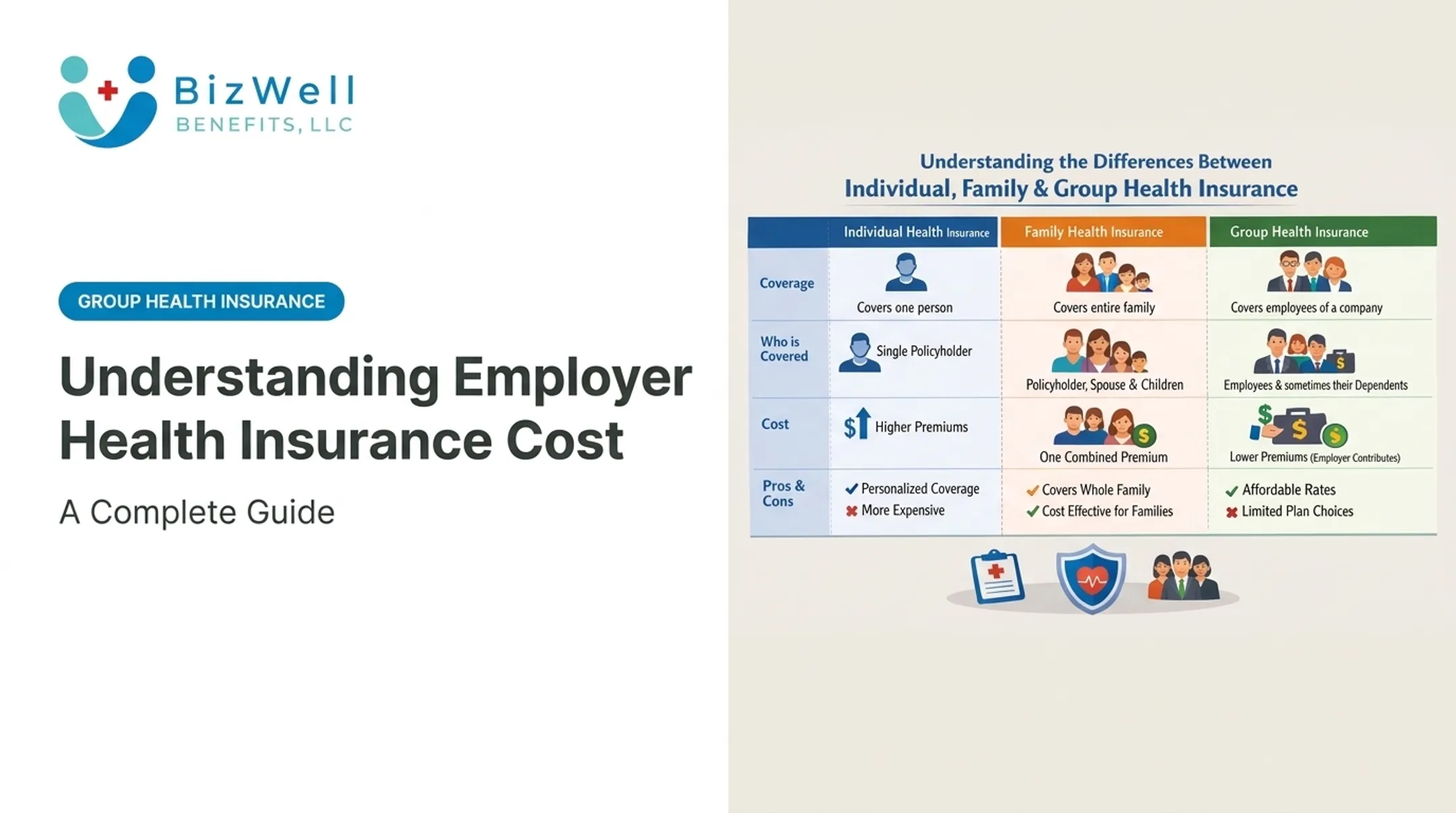
Employer-sponsored PPOs shift who pays the bill. KFF's 2025 Employer Health Benefits Survey puts total PPO premiums at about $818/month single and $2,356/month family ($9,818 and $28,272 per year).
That is the full premium. Employers typically cover a large share of it.
Across all employer plan types, KFF found workers pay about $120/month single and $571/month family, with employers covering the rest. Your paycheck deduction is not the plan's total cost.

Don't blend these numbers. ACA Marketplace, off-Marketplace private, employer-sponsored, and short-term plans have different benefits and eligibility rules. A personalized quote requires your ZIP code, ages, household size, tobacco status, income, and desired coverage level.
What Factors Affect PPO Insurance Premiums?
Several variables combine to set your rate, and understanding them helps you spot where you have room to negotiate cost versus coverage.
Age and Location
Federal rules allow ACA individual and small-group premiums to vary by age within a 3:1 ratio using a standard age curve, according to CMS. A 27-year-old typically pays far less than a 60-year-old for identical coverage.
Each state also sets geographic rating areas, so your county matters. A Harris County resident may see different pricing than someone in Austin or San Antonio, even on the same carrier and plan.
Household Size
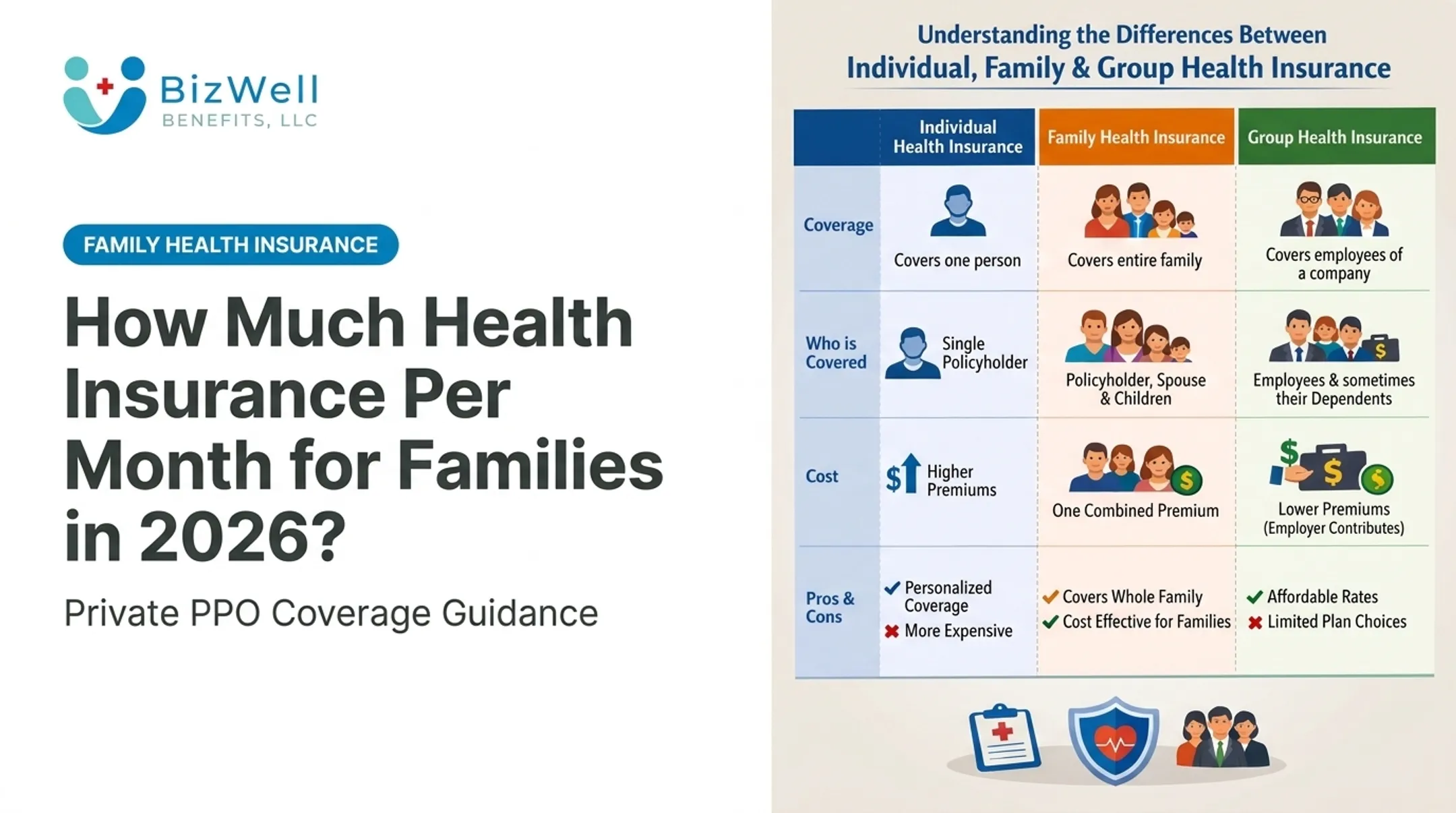
Individual plans cover one person; family plans cover the policyholder plus dependents. Adding a child doesn't multiply your premium the way adding a spouse might. Federal defaults use one rate tier for adults and another for children under 21.
Household size also shapes what you pay after the premium. Once a family hits its combined deductible, cost-sharing can kick in for everyone—even before any single member reaches an individual deductible.
Plan Design and Network
Richer benefits mean higher premiums. Metal tiers roughly split cost this way:
| Tier | Plan Pays | You Pay |
|---|---|---|
| Bronze | 60% | 40% |
| Silver | 70% | 30% |
| Gold | 80% | 20% |
| Platinum | 90% | 10% |
Deductibles, coinsurance, out-of-pocket maximums, and HSA compatibility all move the price. High-deductible plans generally have lower monthly premiums but require more spending before the plan starts sharing costs.
Broader PPO networks with generous out-of-network benefits push premiums higher than narrower-network options. "PPO" still doesn't mean unlimited coverage for every provider or service.
Subsidies and Rating Rules
ACA subsidies are available to individuals and families earning between roughly 100% and 400%+ of the federal poverty level. Eligible Marketplace shoppers can also qualify for cost-sharing reductions on Silver plans.
A plan that looks expensive at full price can look very different after tax credits apply. Employer coverage that meets ACA affordability and minimum-value standards generally disqualifies you from those savings.
Tobacco use can trigger a surcharge where state rules permit it, capped at a 1.5:1 ratio federally. Health history and pre-existing conditions, by contrast, cannot be used to price ACA-compliant plans.

What Other Costs Come With a PPO Plan?
Your premium is just one piece. The full picture includes several cost-sharing components that determine what you'll actually pay when you use care.
- Deductible: What you pay for covered services before certain benefits apply. HealthCare.gov's generic example is $2,000; real plans range widely (e.g., $350 premium with a $7,500 deductible vs. $650 with $2,500).
- Copays and coinsurance: Copays are fixed fees (such as $20 per visit). Coinsurance is a percentage split after the deductible, often 20% you and 80% the plan, and varies by service, network status, and prescription tier.
- Out-of-pocket maximum: For 2026, ACA plans cap this at $10,600 individual / $21,200 family. That usually includes deductibles, copays, and coinsurance, not premiums or non-covered services. Confirm out-of-network rules in the Summary of Benefits and Coverage.
- Out-of-network exposure: Higher coinsurance, separate deductibles or maximums, and balance-billing risk are common outside the network. The No Surprises Act limits surprise bills for most emergency care, not routine out-of-network visits.
Build your annual budget from three figures:
- Twelve months of premiums
- Expected routine medical spending
- A worst-case total using the plan's out-of-pocket maximum
This gives you both a realistic annual number and a safety-net figure if something serious happens.
Is a PPO Worth the Monthly Cost? How to Estimate Your Budget
PPOs aren't universally "better" than HMOs, EPOs, or POS plans. It depends on how you use care.
When PPO Flexibility Pays Off
- Established doctors you don't want to give up
- Frequent travel or time split between cities
- Regular specialist visits for you or a family member
- Self-employment without employer-sponsored coverage
If you work across state lines, travel often, or spend part of the year away from home, a nationwide PPO network can matter more than the monthly savings from a narrower plan.
When a Lower-Premium Plan Makes More Sense
A leaner plan design fits better when:
- Your care needs are predictable and mostly in-network
- You use healthcare rarely
- You're already happy with a strong local provider network
- You can absorb a higher deductible for a lower monthly bill
Building Your Budget
- Set your maximum affordable monthly premium based on your actual budget, not a guess.
- Estimate routine care and prescription use for the year ahead.
- Review the deductible and out-of-pocket maximum against your risk tolerance.
- Confirm your preferred doctors and hospitals are actually in-network for the specific plan.
- Compare at least three or four plan designs, not just one from each carrier.

Mercer has reported average annual costs of $13,178 per employee for PPOs versus $12,235 for HMOs — a $943 gap. Treat that as a rough benchmark. Your own numbers will depend on your deductible, coinsurance, and how much care you actually use.
An independent broker like BizWell Benefits can help individuals, families, self-employed professionals, and small-business owners compare options across multiple carriers and see how network and cost-sharing differences play out in a real budget. No broker should promise a specific rate before reviewing your situation, but a careful review of network rules and cost-sharing with an experienced advisor can prevent costly surprises.
How to Manage PPO Insurance Costs Without Sacrificing Needed Coverage
Lowering your PPO bill doesn't have to mean cutting corners on coverage you'll actually need.
Legitimate ways to control costs:
- Check Marketplace subsidy eligibility before assuming a plan is unaffordable
- Compare employer coverage against individual options side by side
- Select a metal tier that matches your expected care level, not just the cheapest sticker price
- Stay in-network whenever possible
- Use preventive-care benefits, which are often covered in full
- Consider an HSA-compatible plan if you qualify — 2026 contribution limits sit at $4,400 self-only and $8,750 family
What to avoid:
- Choosing a plan solely on the lowest premium
- Relying on short-term coverage without reading the exclusions
Short-term plans sold after September 2024 are capped at a 3-month initial term and a 4-month maximum with renewals. They are not required to cover pre-existing conditions, maternity care, or prescriptions the way ACA plans do.
Before you enroll, verify provider participation directly with the carrier. Directories often lag, and the same carrier can run multiple networks with different doctors in each.
If you're self-employed, managing complex family care, moving between states, or comparing group coverage for a small team, independent broker guidance usually saves the most time and money.
Conclusion
Your PPO insurance cost per month depends on who you are, where you live, how the plan is structured, which carrier you choose, and whether you qualify for financial assistance. There's no shortcut around that.
The more useful comparison isn't the premium in isolation. It's your total expected annual cost, weighed against whether the plan actually gets you to the care you need. A cheap plan that doesn't cover your specialist isn't cheap at all once you factor in what you'd pay out of pocket.
If you're ready to compare real options, BizWell Benefits offers independent, no-pressure guidance for individuals, families, self-employed professionals, and small businesses. That support covers Houston, Austin, Dallas, San Antonio, and much of Texas, with private plans available in most states.
Frequently Asked Questions
How much is PPO insurance in California per month?
California PPO premiums vary by age, rating area, family size, and carrier. KFF's 2026 Marketplace averages are about $440 Bronze to $572 Gold for a 40-year-old—all-plan averages, not PPO-only quotes.
Is a PPO plan worth it?
A PPO is worth it if you value provider choice, travel often, see specialists regularly, or want out-of-network access. If your care needs are predictable and your local network is strong, an HMO or EPO may cost less.
How is a PPO premium different from the total cost of health insurance?
The premium is your recurring monthly payment to keep coverage active. Total cost also includes deductibles, copays, coinsurance, prescriptions, and potentially out-of-network charges throughout the year.
Does a PPO always cover out-of-network doctors?
Most PPOs provide some out-of-network benefits, but coverage levels, deductibles, exclusions, and balance-billing exposure vary widely by plan. Always check the specifics before assuming coverage.
What information do I need to get an accurate PPO insurance quote?
Have your ZIP code, ages of everyone covered, household size, and tobacco status ready. Estimated income (for subsidy screening), preferred providers, current prescriptions, and desired coverage level help refine the quote.