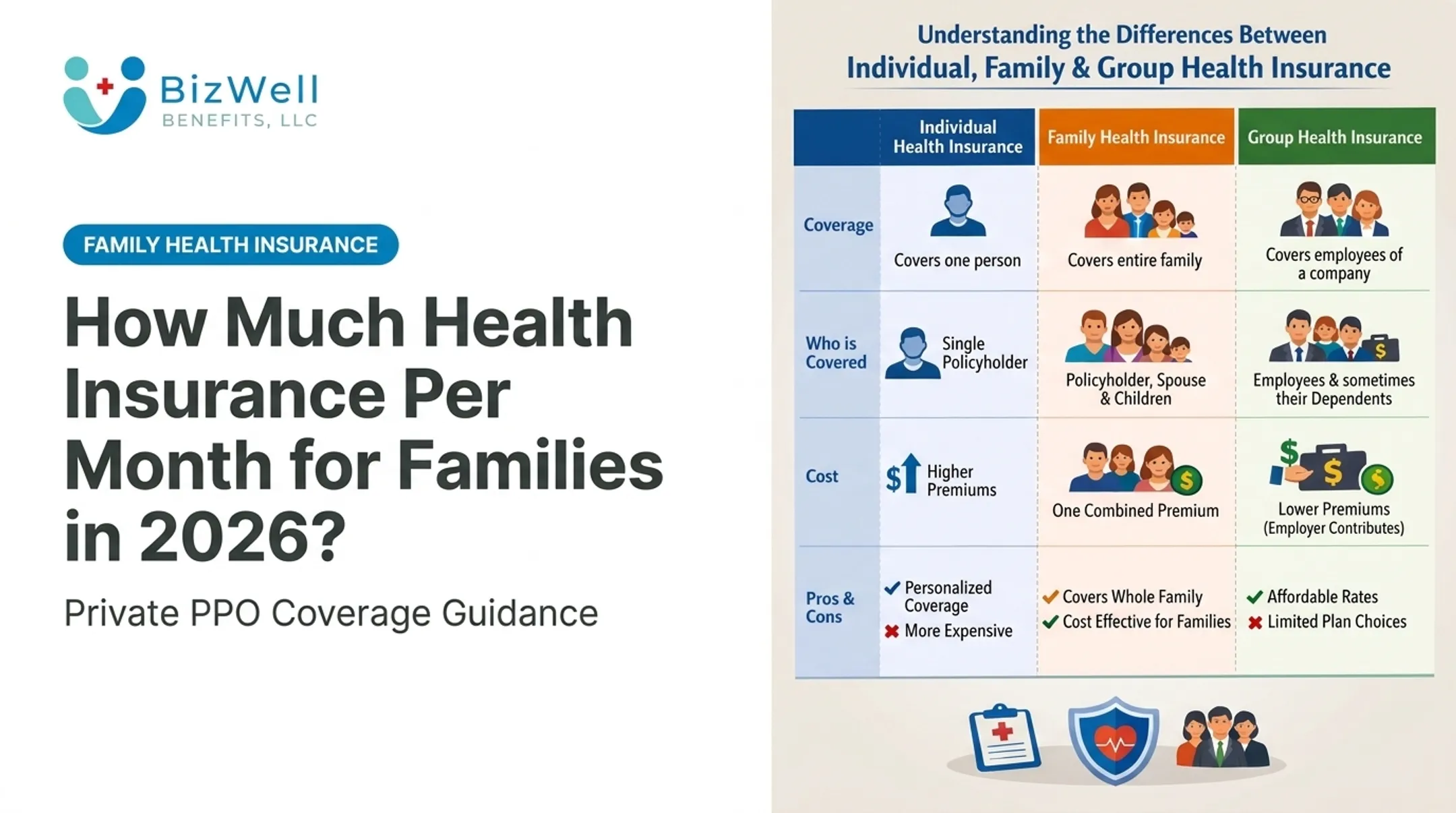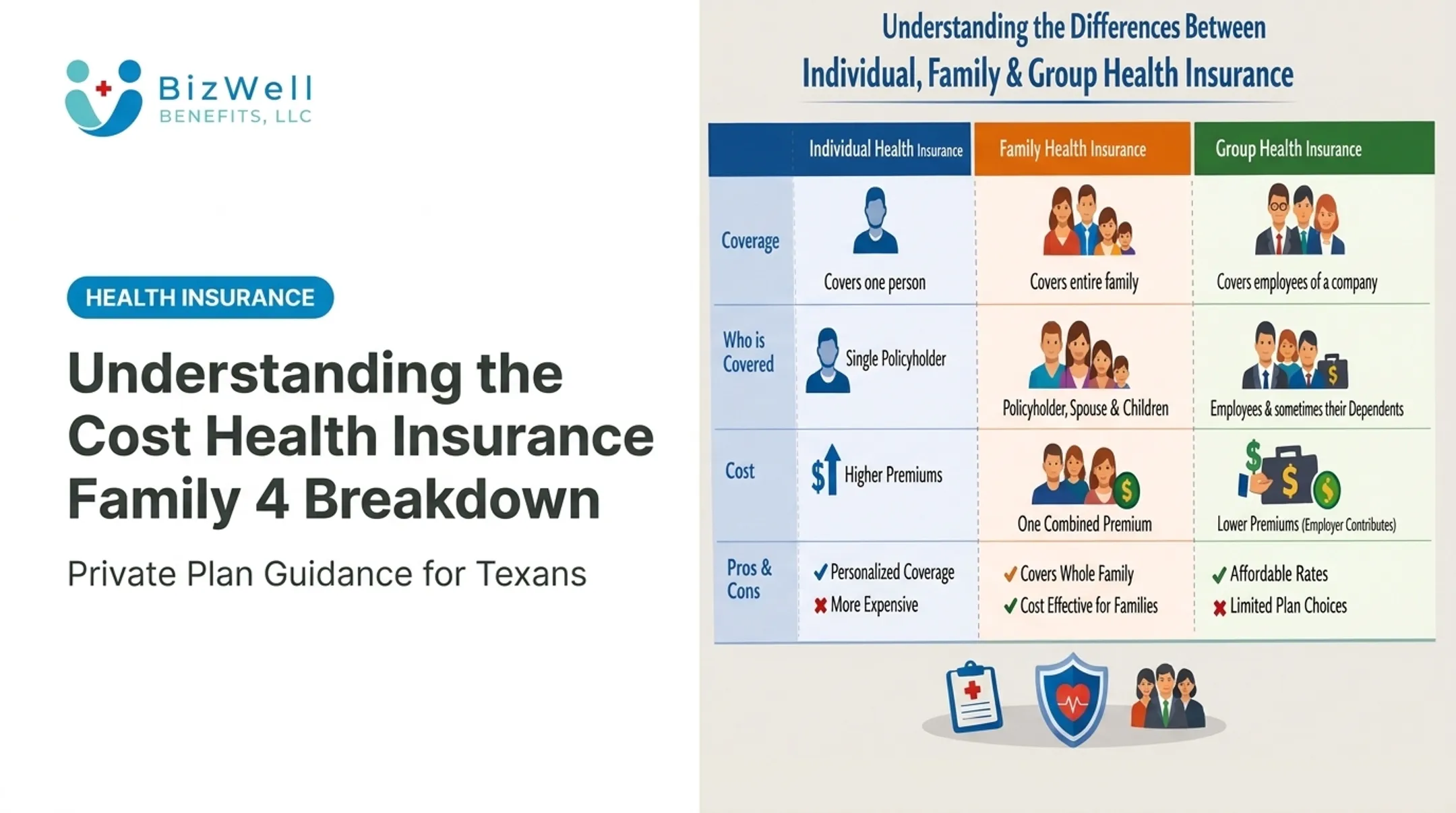

Family pricing shifts based on household size, ages, ZIP code, tobacco use, plan type, network, expected medical usage, and whether you qualify for subsidies. A 35-year-old self-employed parent in Houston might get one quote for $380 a month and another for $690 a month for a comparable level of coverage.
This guide breaks down current cost ranges, the difference between premiums and out-of-pocket costs, what actually drives your family's price, and how to compare plans without guessing.
TL;DR
- Employer-sponsored family coverage averaged $26,993/year in 2025; workers paid about $6,850.
- Private plans often run from a few hundred dollars to over $1,000/month, based on age, location, and benefits.
- Tax credits, cost-sharing reductions, and employer contributions can sharply cut what your household pays.
- Higher monthly premiums can pay off if your family needs regular care, prescriptions, or specialists.
How Much Does Medical Insurance Cost for a Family?
There's no fixed national price for family medical insurance. Anyone quoting you one number without asking about your age, location, and household size is skipping steps. Current benchmark data shows a clearer range.
Employer-sponsored family coverage averaged $26,993 per year in total premium in 2025. Employees contributed about $6,850 annually (roughly $571/month), according to the KFF 2025 Employer Health Benefits Survey. Employers typically cover the rest.
Private, off-Marketplace pricing varies more by household makeup:
- Single adult: Often a few hundred dollars a month, driven mainly by age and ZIP code
- Two adults: Higher than one adult, usually still less than a full family plan with kids
- Family with children: A 35-year-old self-employed parent in the Houston area might see $380–$690 a month for comparable plans
Location shifts those quotes further. Harris County pricing won't match Austin or San Antonio, even on a similar plan design.
What the Premium Doesn't Cover
The sticker price is only the entry fee. Your real cost of coverage includes:
- Premium – the recurring payment that keeps your plan active
- Deductible – what you pay for covered care before the plan pays its share
- Copays and coinsurance – fixed fees or percentage costs for covered services
- Out-of-pocket maximum – your plan-year ceiling for covered in-network expenses

For 2026 Marketplace plans, that cap is $10,600 for an individual and $21,200 for a family, according to HealthCare.gov's glossary.
Simple budget check: at $650/month in premiums ($7,800/year) plus $1,500 in routine cost-sharing, plan on about $9,300 for the year. Treat the out-of-pocket max as your worst-case exposure if a major claim hits.
One catch: monthly premiums don't count toward that out-of-pocket max. Neither do most non-covered services, out-of-network care, dental, or vision. Confirm prescription cost-sharing and any tax credits before you treat a quote as your full cost.
Key Factors That Affect the Cost of Medical Insurance
Insurers price plans using a handful of regulated rating factors. Subsidies and employer contributions then adjust what you actually pay out of pocket.
Age and Household Composition
Older adults pay more than younger ones for similar coverage. A 27-year-old buying solo will usually pay far less than a 60-year-old shopping for the same plan type.
Family plans also cost more than individual coverage because each added person brings more potential claims. Kids may qualify for separate programs like CHIP in some households, which can change the math.
Location and Carrier Availability
Local medical prices, carrier competition, and state regulations all shift premiums. In Texas, for example, 2026 Marketplace average premiums ran about $566 per month per person before subsidies, per KFF's state-level data. That's a statewide figure, not a guaranteed quote for your county.
Plan Type, Metal Tier, and Network
- HMO – Lower premiums, but limited to in-network providers and often requires referrals
- EPO – No referrals needed, but still network-restricted except for emergencies
- PPO – Higher premiums typically, but no referrals and out-of-network access at added cost
Metal tiers (Bronze, Silver, Gold, Platinum) describe cost-sharing splits, not care quality:
| Tier | Plan Pays | You Pay |
|---|---|---|
| Bronze | 60% | 40% |
| Silver | 70% | 30% |
| Gold | 80% | 20% |
| Platinum | 90% | 10% |

Income, Subsidies, and Coverage Source
Marketplace premium tax credits and cost-sharing reductions can lower costs for eligible households based on income and family size. Employer contributions work differently and apply regardless of income.
Off-Marketplace private plans don't generate tax credits at all, so eligibility and enrollment route both matter. Check HealthCare.gov directly for current thresholds before assuming you qualify.
Tobacco Use and Other Rating Factors
Tobacco use can raise premiums in many states, though the exact surcharge—if any—varies by state. Insurers cannot use health status, medical history, or sex to set ACA Marketplace premiums.
Short-term or other non-ACA products can follow different rules entirely, so read the fine print before comparing them to major medical coverage.
Low-Cost vs High-Cost Medical Insurance—and How to Estimate the Right Family Budget
Neither a budget plan nor a premium plan is universally "better." What matters is your family's total financial exposure—not just the monthly premium.
Lower-Premium Coverage
Lower monthly costs often come paired with higher deductibles, more coinsurance, or narrower networks. This structure can fit a family with low expected healthcare use and enough savings to cover a high deductible if something unexpected happens.
Higher-Premium Coverage
Paying more each month can make sense when your family has frequent appointments, ongoing prescriptions, planned procedures, or a strong preference for broader provider access. Predictable copays under a richer plan can end up saving money over a full year compared to a leaner one.
A simple side-by-side shows why the monthly bill alone misleads:
- Plan A: $350/month, $7,500 deductible
- Plan B: $650/month, $2,500 deductible
Plan A saves $300 a month—$3,600 a year—in premiums. If your family hits the deductible, Plan B's lower threshold can erase that gap quickly.

Compare Plans Using the Same Checklist
Before choosing, line up each option against:
- Annual premium cost
- Individual and family deductibles
- Copays and coinsurance percentages
- Individual and family out-of-pocket maximums
- Prescription coverage and formulary
- Network rules and exclusions
Then confirm your preferred doctors, pediatrician, specialists, pharmacy, and current medications are actually covered. A carrier's name on the plan doesn't guarantee your provider is in-network; one carrier can run a broad PPO on one plan and a narrower network on another.
Estimate Your Household's Likely and Worst-Case Exposure
Build a quick exposure estimate:
- Tally routine visits, prescriptions, preventive care, and known specialist needs
- Compare that total to each plan's premium plus cost-sharing
- Stress-test a bad year against the family out-of-pocket maximum
The out-of-pocket maximum is not a blanket guarantee. Out-of-network care and excluded services can still cost extra after you hit that cap.
When the Comparison Gets Complicated
If you're staring at five quotes and can't tell which one fits, an independent licensed agent can help sort premium, network, and cost-sharing tradeoffs in plain language.
BizWell Benefits compares individual and family health insurance options across multiple carriers, including nationwide PPO access and year-round enrollment. Consultations are free, with no obligation to enroll.
What Most People Miss When It Comes to Family Medical Insurance Costs
Even careful shoppers overlook a few things that end up costing real money.
- Premium-only shopping: Deductible, coinsurance, copays, drugs, and the out-of-pocket max drive true annual cost.
- Defaulting to one family plan: Two working spouses may pay less on separate employer plans when each employer contributes generously.
- Skipping network and formulary checks: A doctor or drug in a carrier’s broad directory may still be out of network on your specific plan—verify before you enroll.
- Missing special enrollment windows: Marriage, a new baby, job loss, a permanent move, or divorce can open a limited signup period; miss it and you may wait months for coverage.
- Using short-term plans as major medical: They bridge temporary gaps and often exclude pre-existing conditions, mental health, and prescriptions that ACA plans cover.
Conclusion
The cost of medical insurance for a family depends on where you live, who's covered, how the plan is designed, and whether you qualify for financial assistance. Private coverage alone can range from a few hundred dollars a month to well over $1,000, depending on those variables.
The right comparison weighs predictable premiums against potential out-of-pocket costs, provider access, and prescription needs, not just the number on the first page of a quote.
When those tradeoffs are hard to sort out alone, an independent licensed agent can compare carriers side by side and map real costs to your budget. Katherine Nguyen at BizWell Benefits has spent more than 10 years helping Houston-area families—and clients who need nationwide PPO access—compare coverage across carriers. Call 713-352-7573 for a free, no-pressure consultation before you commit to a plan.
Frequently Asked Questions
How much is health insurance a month for a single person in the US?
Employer-sponsored single coverage averaged about $777/month in total premium in 2025, with workers paying roughly $120 of that. Your actual cost depends heavily on age, location, plan tier, and whether you qualify for assistance.
What is the average cost of health insurance for a family in the US?
Employer-sponsored family coverage totaled about $2,249/month on average in 2025, with employees contributing roughly $571 of that. Confirm whether a quote is the full premium or your share, then weigh deductibles and out-of-pocket maximums.
How much does health insurance cost in Texas?
Texas Marketplace plans averaged about $566/month per person before subsidies in 2026, per KFF data. Employer-sponsored family plans in Texas ran roughly $1,774/month in total premium as of the latest available data, with the employee typically paying a smaller share.
Is $200 a month a lot for health insurance?
It depends entirely on who's covered, whether subsidies apply, and the plan's deductible and network. For a single subsidized adult, $200 might be reasonable; for an unsubsidized family plan, it would be unusually low.
Is it better to have a family plan or individual plan?
Compare employer contributions, subsidy eligibility, ages, and expected care needs. Separate individual plans sometimes cost less than one family plan, especially when both spouses have employer options.
Can I buy my own private health insurance?
Yes. You can enroll through the ACA Marketplace or buy private, off-Marketplace coverage directly. Only Marketplace plans can qualify for subsidies; private plans generally cannot, so compare benefits, exclusions, and total costs carefully before choosing either route.