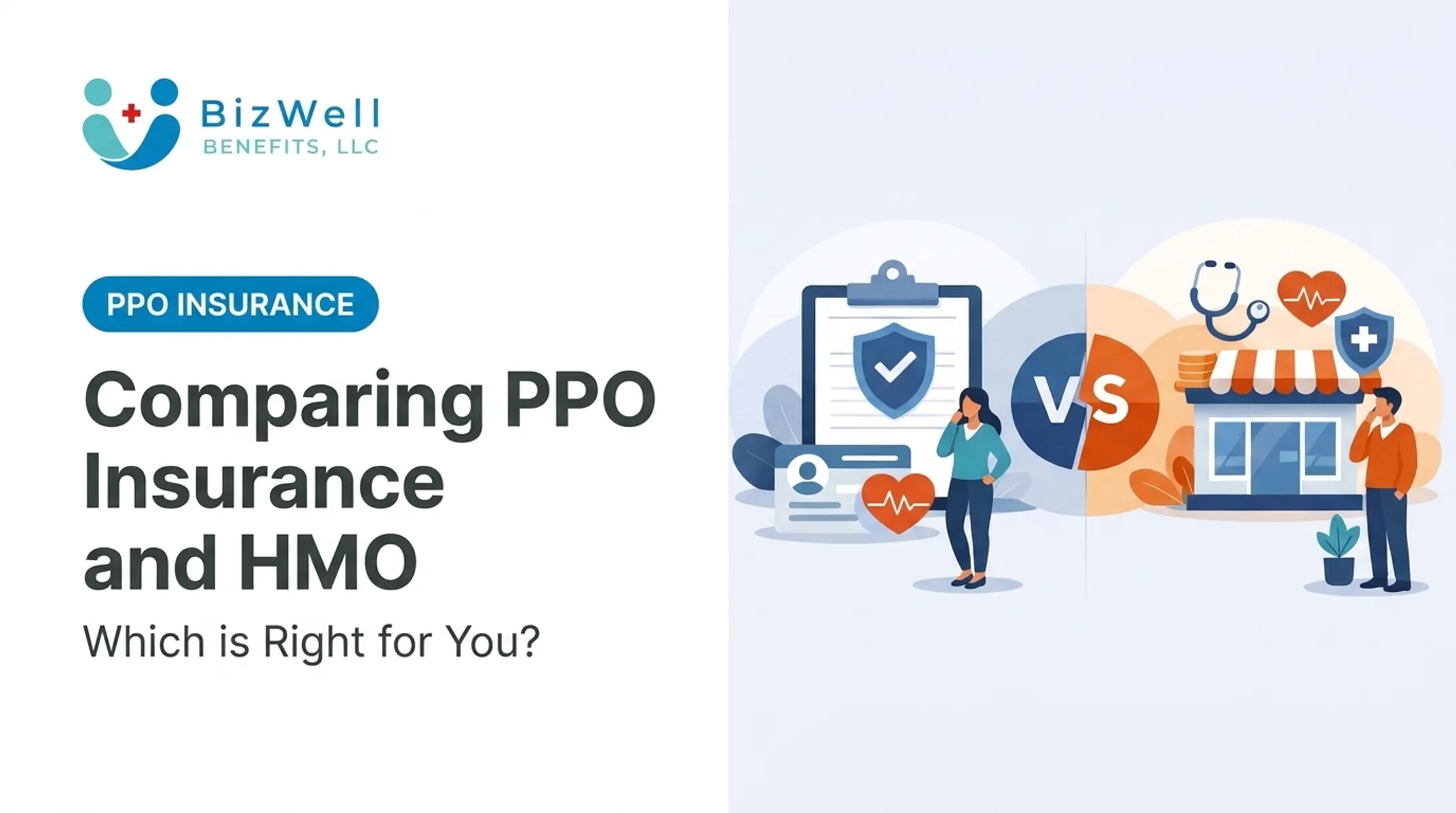

An HSA and a PPO aren't really competing products. An HSA is a tax-advantaged savings account. A PPO is a network design that determines which doctors you can see and how much you'll pay for them. In practice, most people are actually comparing an HSA-eligible high-deductible health plan against a traditional PPO.
This guide walks through premiums, deductibles, out-of-pocket maximums, provider access, and tax advantages, so you can figure out which structure actually saves you more money based on how you use healthcare, not just what shows up on the enrollment portal.
TL;DR
- An HSA is not insurance; it is a tax-advantaged account paired with an HSA-eligible high-deductible plan.
- HSA-eligible plans usually cut monthly premiums, but you pay more out of pocket before coverage starts.
- PPOs cost more each month, with predictable copays and broader in-network provider access.
- Low care use plus a cash cushion (and employer HSA contributions) often favor HSA; frequent care often favors PPO.
HSA Plan vs PPO: Quick Comparison
Here's how these two structures typically stack up. Actual numbers vary by carrier, so always confirm figures in your specific Summary of Benefits and Coverage before enrolling.
| Factor | HSA-Compatible Plan | PPO |
|---|---|---|
| Monthly premium | Generally lower | Generally higher |
| Deductible | Higher (often $1,650+ single) | Lower, varies by plan |
| Point-of-care cost | You often pay full negotiated rate pre-deductible | Copays/coinsurance apply sooner |
| Tax advantages | Pre-tax contributions, tax-free growth | None unless plan is HSA-qualified |
| Provider referrals | Depends on underlying network | Rarely required |
Premiums
HSA-compatible plans typically carry lower monthly premiums because the plan shifts more early cost onto you through a higher deductible. PPOs usually charge more upfront in exchange for lower deductibles and copay-based visits.
Per the 2025 KFF Employer Health Benefits Survey, average annual premiums for HDHP-style plans came in lower than PPOs at surveyed employers. The gap narrows by employer and metal tier, so verify actual quotes instead of assuming a fixed dollar gap.
Deductibles and Point-of-Care Costs
With an HSA-eligible plan, you generally pay the full negotiated rate for most services until you hit the deductible. Preventive care is usually covered before that point, but confirm this in your plan documents rather than assuming it.
PPOs, by contrast, often apply copays or coinsurance right away for office visits and prescriptions, which makes budgeting for routine care more predictable.
HSA Tax Advantages and Account Ownership
HSA-compatible plans offer a clear tax edge. According to IRS Publication 969, eligible individuals can:
- Deduct contributions even without itemizing
- Exclude employer contributions from gross income
- Grow the account tax-free
- Withdraw funds tax-free for qualified medical expenses
- Roll over unused balances year after year, with no "use it or lose it" rule
A traditional PPO generally doesn't qualify for HSA contributions unless it's specifically built to meet HDHP requirements. The label "PPO" tells you nothing about HSA eligibility on its own.
Provider Access and Referrals
Network flexibility isn't tied to whether a plan is HSA-eligible. It's tied to the underlying network design.
PPOs typically let you see specialists without a referral and may cover some out-of-network care, usually at a higher cost. Always check the plan's Summary of Benefits and Coverage for what is actually paid.
Best Fit
- HSA-compatible plan: Stronger fit if you can handle higher upfront costs, want tax-advantaged savings, and expect lower or unpredictable care needs.
- PPO: Stronger fit if you want predictable cost-sharing, expect regular visits, or need out-of-network provider flexibility.

Understanding HSA-Compatible Plans and PPO Plans
What Is an HSA-Compatible Plan?
An HSA-compatible plan meets federal requirements for HSA contributions. It is generally an eligible high-deductible health plan (HDHP).
IRS HDHP thresholds for recent plan years:
| Year | Min. deductible (self / family) | Max. out-of-pocket (self / family) |
|---|---|---|
| 2025 | $1,650 / $3,300 | $8,300 / $16,600 |
| 2026 | $1,700 / $3,400 | $8,500 / $17,000 |
Figures follow IRS Rev. Proc. 2025-19.
Once paired with an HSA, the account itself works like this:
- Contributions can come from you, your employer, or both (2025 limits: $4,300 self-only, $8,550 family)
- Funds roll over indefinitely, unlike a Flexible Spending Account
- The account stays with you if you change jobs or leave the workforce
- Some HSAs allow investing balances once you hit a minimum threshold
The trade-off: lower premiums and long-term tax benefits can be offset by bigger bills early in the plan year. This setup tends to work well for generally healthy people with solid emergency savings or steady employer contributions. It's riskier for anyone with frequent care needs or limited ability to absorb a large bill in January.
What Is a PPO Plan?
A Preferred Provider Organization (PPO) is a network structure, not a savings vehicle. You get an in-network list of providers plus, in most cases, some out-of-network coverage at a higher cost to you. Exact features vary by carrier and plan.
Common advantages:
- No referral needed to see specialists in most plans
- Broad provider choice, often including nationwide access
- More predictable copay or coinsurance for routine care
Common drawbacks:
- Higher premiums than HSA-eligible alternatives
- Out-of-network care can trigger balance billing
- Preferred doctors or medications aren't guaranteed without verification
PPOs tend to fit people who:
- Need regular appointments or ongoing prescriptions
- Expect a planned procedure or pregnancy-related care
- Manage a chronic condition
- Want a strong say in specific providers
Important Details That Can Change the Comparison
Before assuming either plan type is cheaper, compare:
- Prescription tiers and formulary rules
- Specialist copays versus coinsurance
- Lab and imaging cost-sharing
- Individual versus family (embedded) deductibles
- The actual out-of-pocket maximum, not just the deductible
Preventive care, emergency treatment, and out-of-network billing rules differ by plan. Confirm these in the official plan documents. Don't assume based on the plan's label alone.
HSA Plan vs PPO: Which One Saves You More Money?
The real answer comes from total-cost math, not premium comparisons. Add your annual premiums to your expected out-of-pocket costs, then subtract any employer HSA contributions and tax savings.
Separately, check each plan's worst-case exposure using its out-of-pocket maximum. HealthCare.gov notes that your actual costs depend heavily on services used, not premiums alone.
Low-use scenario (hypothetical): Someone with minimal care needs might pay $350/month ($4,200/year) on an HSA-eligible plan with a $7,500 deductible, versus $650/month ($7,800/year) on a PPO with a $2,500 deductible.
With only a couple of routine visits, the HSA-eligible plan could save over $3,000 annually, even before tax-advantaged contributions.
Moderate-to-high-use scenario (hypothetical): Now picture recurring specialist visits, ongoing prescriptions, or a planned procedure. The PPO's lower deductible and predictable copays could mean the person hits their out-of-pocket maximum faster and pays less overall than someone stuck paying full price toward a $7,500 deductible on the HSA-eligible plan.
Two plans can project similar annual totals on paper but feel very different in practice. If one requires a much larger deductible before insurance starts paying more, that's a cash-flow risk worth weighing separately from the sticker price.

Before enrolling, run through this checklist:
- Confirm your doctors and medications are covered under each plan
- Read the actual Summary of Benefits and Coverage, not just the marketing summary
- Check whether your employer contributes to an HSA and how much
- Estimate your realistic healthcare use for the coming year
- Verify HSA eligibility rules apply to the specific plan you're considering
- Compare individual and family out-of-pocket maximums separately
- Note your enrollment deadline so you don't default into a plan by accident
If this feels like a lot to untangle alone, that's normal. An independent broker like BizWell Benefits can compare multiple carriers' plans side by side for individuals, families, self-employed professionals, and small-business owners.
You get plain-language guidance matched to your health needs and budget. Consultations are free, with no pressure to commit to any plan.
Real-World Cost Scenarios
Real numbers help more than abstract rules. Here are three illustrative scenarios based on common patterns, not guaranteed outcomes for any specific person.
Scenario 1: The low-use single professional. A healthy 29-year-old with no chronic conditions picks an HSA-eligible plan with a lower premium. She rarely visits a doctor beyond an annual physical, which is typically covered as preventive care before the deductible applies.
Her main cost driver all year is the premium itself, and any HSA contributions she makes reduce her taxable income.
Scenario 2: The family with recurring prescriptions. A family of four manages a child's asthma medication and regular pediatric visits. Their consistent, predictable costs make a PPO's copay structure easier to budget for than an HSA-eligible plan's higher deductible, even though the PPO's premium runs higher every month.
Scenario 3: The person expecting a planned procedure. Someone scheduled for a surgery later in the year may hit their out-of-pocket maximum quickly either way. Here, the deciding factor often becomes which plan's provider network includes their surgeon and hospital, not just the deductible structure.

What tips the scale in each case comes down to more than the plan label:
- Cash reserves for deductibles and upfront costs
- Expected care utilization over the year
- Existing provider and hospital relationships
- Ability to fund an HSA consistently
- Employer HSA contributions, when available
SHRM's 2025 Employee Benefits Survey found average maximum employer HSA contributions of roughly $1,059 for individual coverage and $1,735 for family coverage. Those figures vary widely by employer.
The "winner" isn't fixed. It shifts if your health needs change, your income changes, you have a baby, or your favorite specialist leaves a network.
Conclusion
There's no universal winner between an HSA-compatible plan and a PPO. An HSA-eligible plan usually costs less if you have lower healthcare use, solid emergency savings, and employer contributions or tax benefits to lean on. A PPO usually costs less if you expect frequent visits, ongoing prescriptions, or need specific out-of-network providers.
Before you enroll, compare total annual costs—not just premiums. Run through:
- Out-of-pocket maximums
- Prescription coverage
- HSA eligibility
- Employer contributions on the table
Review current plan documents directly. When the numbers get complicated, get a second set of eyes from a licensed independent broker such as BizWell Benefits before you commit for the year.
Frequently Asked Questions
Which is better, HSA or PPO insurance?
Neither is universally better. Compare an HSA-eligible HDHP against a PPO using your expected care needs, premiums, tax benefits, provider access, and cash on hand for upfront costs.
Are HSA plans worth it?
They're worth it when lower premiums, employer contributions, tax advantages, and rollover savings outweigh a higher deductible. Frequent care needs or limited cash reserves often make a PPO more practical instead.
What happens if I switch from HSA to PPO?
Existing HSA funds stay yours and remain usable for qualified expenses. New contributions typically stop once you're no longer covered by an HSA-eligible plan, so confirm timing rules with your employer, broker, or plan administrator before switching mid-year.
Can you have an HSA with a PPO plan?
Yes, but only if that specific PPO meets federal HDHP requirements. Many traditional PPOs don't qualify. Always verify a plan's official HSA-eligibility status rather than assuming based on the "PPO" label.
Which insurance plans are HSA-eligible?
Eligibility depends on current federal deductible and out-of-pocket limits, plus having no disqualifying extra coverage. The PPO or HDHP label alone does not decide it. Check current IRS guidance and your plan documents to confirm.