
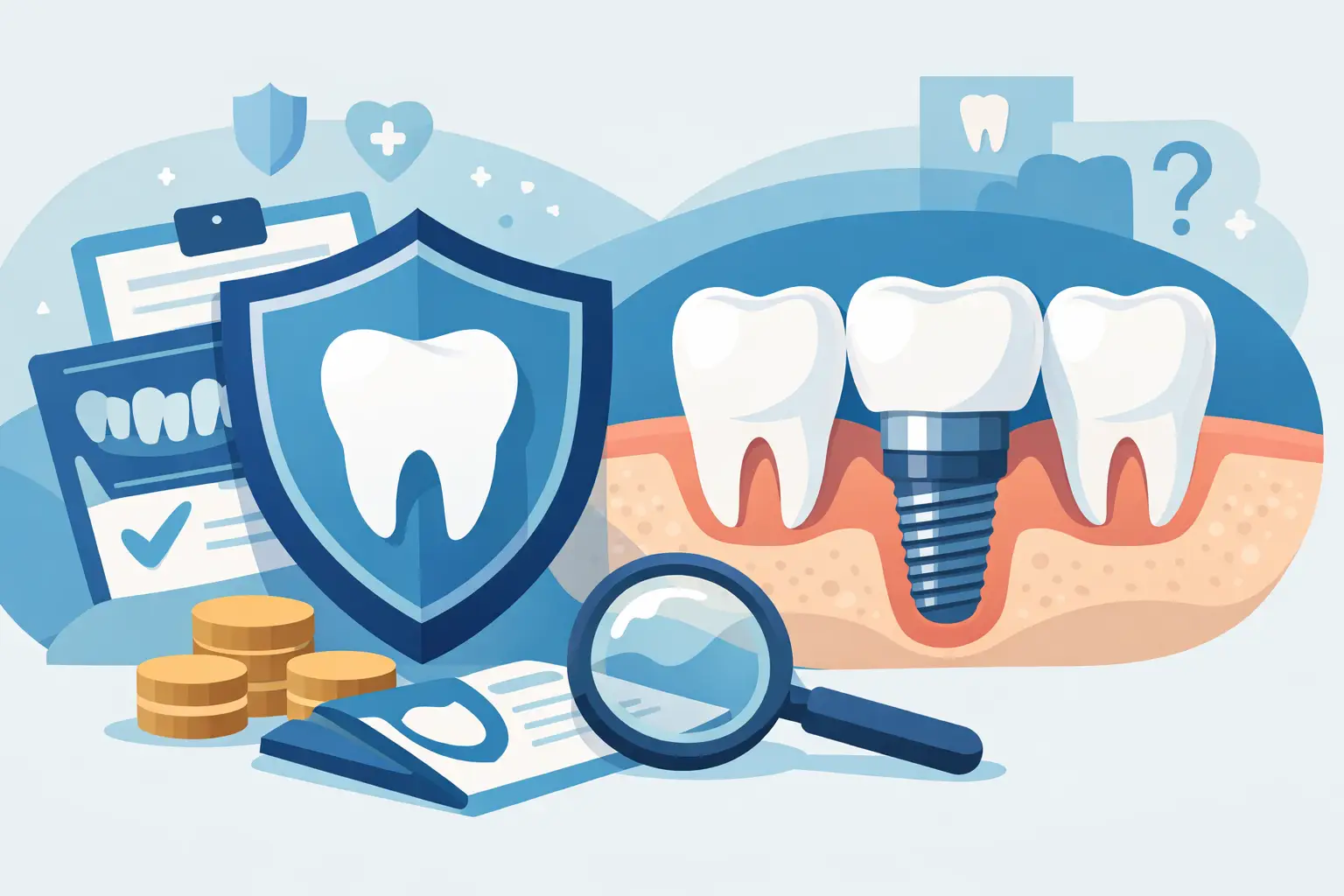
Replacing a missing tooth can improve far more than a smile. It can make meals easier, support clear speech, and help protect the alignment of surrounding teeth. But because implant treatment can carry a significant price tag, the first question many Texas families ask is: does dental insurance cover implants?
The honest answer is sometimes, but rarely in a way that pays the entire bill. Coverage depends on the dental plan, the reason for treatment, the plan’s waiting periods and annual maximum, and whether every part of the procedure is considered eligible. Understanding those details before treatment begins can prevent an unwelcome surprise when the claim is processed.
Table of Contents
ToggleDoes dental insurance cover implants?
Many modern dental insurance plans offer some implant coverage, particularly plans designed with more comprehensive major-service benefits. However, implants were commonly excluded under older or lower-cost plans, and exclusions still exist. A plan may cover an implant at 50% after a waiting period, cover only the crown placed on top of it, or exclude the implant fixture entirely.
An implant is not one simple service. Treatment can include an exam, X-rays or 3D imaging, tooth extraction, bone grafting, the titanium implant post, an abutment, and the final crown. Each service may have a different coverage rule. That is why seeing the word “implants” in a plan brochure is not enough. The actual certificate of coverage and the dentist’s pre-treatment estimate matter.
Dental plans generally group services into preventive, basic, and major care. Cleanings and exams often receive the strongest coverage. Fillings and simple extractions may fall under basic care. Implants, crowns, bridges, dentures, and oral surgery are more likely to be major services, where members typically pay a larger share.
What insurance may pay for implant treatment
When a plan includes implants, it commonly pays a percentage of the insurer’s allowed amount after any deductible has been met. For major services, 50% coverage is common, although plan designs vary. That percentage can sound generous until you account for the annual maximum.
Most traditional dental plans have an annual benefit maximum, often somewhere around $1,000 to $2,000 per person. Once the plan has paid that amount for the year, the member is responsible for additional eligible costs. Since a single implant can cost more than an annual maximum, insurance may reduce the expense without eliminating it.
For example, a plan might cover 50% of an eligible implant-related service but have a $1,500 annual maximum. If the treatment cost is several thousand dollars and the plan has already paid for other dental work that year, the available benefit may be much smaller than expected. The exact amount also depends on the dentist’s contracted network rate if you use an in-network provider.
The implant post, abutment, and crown may be treated differently
Ask how the plan handles every stage, not simply whether it “covers implants.” Some plans cover the final implant-supported crown but not the surgical placement of the post. Others cover the post and crown but exclude bone grafting. A plan may also have separate replacement limits, such as covering a crown only once every five or seven years.
If the tooth was lost before the policy’s effective date, pre-existing condition rules can matter on certain plans. While many dental policies do not impose broad pre-existing condition exclusions, they may exclude replacement of teeth that were missing before enrollment. This is an especially important question for anyone shopping for coverage after already being told they need an implant.
Waiting periods can change the timing
A waiting period is the time you must be enrolled before benefits apply to certain services. Preventive care may be available right away, while major services such as implants may require a waiting period of six months, 12 months, or longer. Some plans waive waiting periods when you can show qualifying prior dental coverage, but the rules differ by carrier.
Do not assume a plan purchased this month will help pay for an implant procedure next month. Before enrolling, confirm the waiting period for implants specifically, whether credit for prior coverage is available, and whether the waiting period applies to related procedures like extractions or crowns.
For someone with an urgent dental need, a plan with a long major-services waiting period may still be useful for preventive care later, but it may not solve the immediate implant cost. In that situation, it can be more practical to compare dental office payment options, financing terms, and treatment sequencing alongside insurance choices.
Network rules affect your final cost
A PPO dental plan generally gives you the freedom to visit out-of-network dentists, but that does not mean your costs will be the same. In-network dentists agree to negotiated fees, which can provide savings even after insurance reaches its annual maximum. Out-of-network care may be subject to lower allowed amounts, balance billing, separate deductibles, or reduced benefit percentages, depending on the plan.
Before treatment, ask the dentist whether they participate in your specific dental network. Then ask for a written treatment plan that uses the procedure codes the office expects to bill. Your insurer can review those codes through a pre-treatment estimate, sometimes called a pre-determination of benefits.
A pre-treatment estimate is not a guarantee of payment. Eligibility, remaining annual maximums, and clinical documentation still affect the final claim. Still, it is one of the best tools for estimating your responsibility before a large procedure begins.
Compare plans for more than the monthly premium
Choosing a dental plan solely because it has the lowest monthly premium can backfire when you know major treatment may be needed. A lower-premium plan may have no implant benefit, a restrictive waiting period, or a modest annual maximum. A higher-premium plan may offer better major-service benefits, but it can still be a poor fit if the annual maximum is low or your preferred dentist is outside the network.
When comparing options, focus on the details that affect your treatment timeline and likely cost:
- Whether implant placement, abutments, implant crowns, and bone grafts are covered or excluded
- The waiting period for major services and whether prior coverage can reduce it
- The annual maximum, deductible, and percentage paid for major care
- Whether a missing-tooth clause or replacement limitation applies
- The size of the in-network dentist network near your home or workplace
These questions are just as relevant for self-employed professionals choosing individual dental coverage as they are for small business owners evaluating group benefits. For employers, a dental plan that includes meaningful major-service coverage can be a valuable part of a benefits package, especially when employees have access to a broad PPO network.
When an implant may not be the only option
An implant is often an excellent long-term tooth replacement option, but it is not automatically the right choice for every person or every budget. A fixed bridge or removable partial denture may cost less upfront and may receive different insurance benefits. The clinical choice should come from a conversation with your dentist, while the financial choice should account for insurance, timing, and your comfort with the alternatives.
It is also worth considering whether treatment can be phased across benefit years. For example, an extraction or bone graft could occur late in one plan year, while implant placement or crown restoration occurs after the annual maximum resets. This is not always clinically appropriate, and treatment should never be delayed in a way that compromises oral health. But when timing is flexible, it can be a reasonable question to discuss with your dentist and insurance advisor.
Questions to ask before you enroll or begin treatment
A clear answer starts with clear questions. Ask the insurance carrier whether implants are a covered benefit, not just whether major services are covered. Ask whether missing teeth before enrollment are excluded, how long the waiting period lasts, and what your annual maximum will be. Then provide the dentist’s procedure codes and request a pre-treatment estimate.
If you are comparing plans and feeling buried in deductibles, networks, exclusions, and waiting periods, personalized guidance can make the decision easier. BizWell Benefits helps individuals, families, and employer groups sort through dental coverage choices with the same practical focus used for health insurance: find a plan that fits the real need, not just the monthly premium.
The best next step is to get the treatment plan in writing, review the coverage details before scheduling, and choose with your dental health and household budget in view.